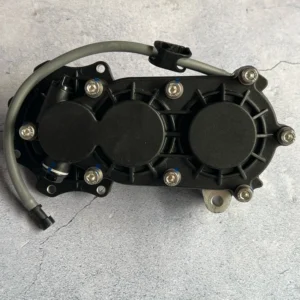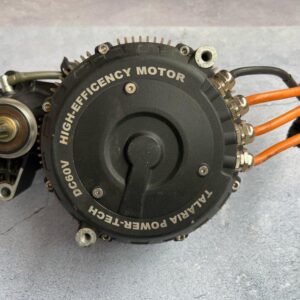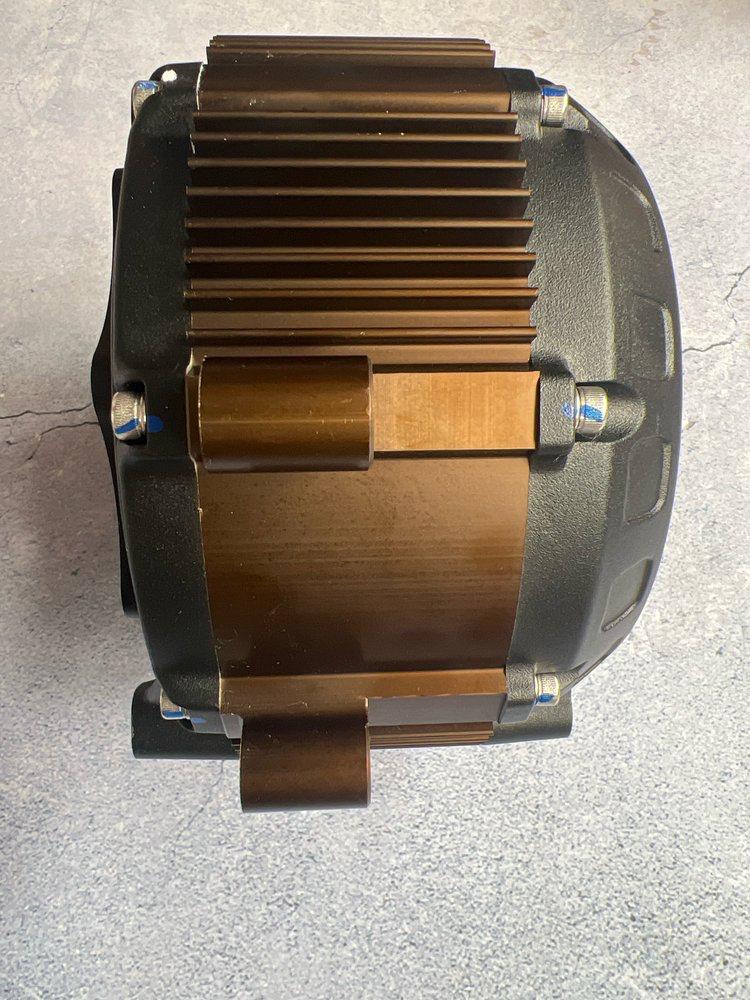
Talaria Sting PRO MX5 Motor TL5500 2025 is engineered for riders who want maximum power, instant torque, and premium off-road performance in a compact electric platform. This 72V electric dirt bike motor setup delivers aggressive acceleration, impressive climbing ability, and responsive control that makes it ideal for technical trails and fast-paced track riding. With advanced electronics and robust construction, the MX5 PRO TL5500 powertrain is built to handle demanding riders and harsh terrain while keeping maintenance low.
Key performance features
The Talaria Sting PRO MX5 TL5500 2025 runs a 72V system paired with a high-output IPM (Interior Permanent Magnet) mid-mounted motor, designed to deliver strong torque and smooth power delivery across all riding modes. Riders benefit from a rated power of around 5.5 kW and peak power up to 13.4 kW when unrestricted, giving the bike serious punch for acceleration, jumps, and steep climbs. Combined with a robust gearbox and chain drive, the MX5 PRO Motor TL5500 offers efficient power transfer with quiet, reliable operation.
Powering the Talaria Sting PRO MX5 Motor TL5500 2025 is a 72V 40Ah lithium battery using high-quality Samsung 50S cells for improved performance and longevity. This 2880 Wh pack is designed for extended trail sessions, with many setups quoting up to around 100 km of range at lower speeds and efficient riding conditions. Fast-charging capabilities typically allow riders to get back on the trail in roughly 2–3 hours with an appropriate charger, making it practical for frequent use.
The MX5 PRO TL5500 motor system is supported by three selectable ride modes: Eco, Sport, and Hyper, allowing riders to tune power delivery for range, traction, or maximum performance. Regenerative braking with multiple adjustable levels helps recover energy under deceleration and gives finer control on descents, especially when combined with a dedicated regen lever on some models. High-performance hydraulic disc brakes with large 220 mm rotors and powerful calipers provide the stopping power needed to match the motor’s output.